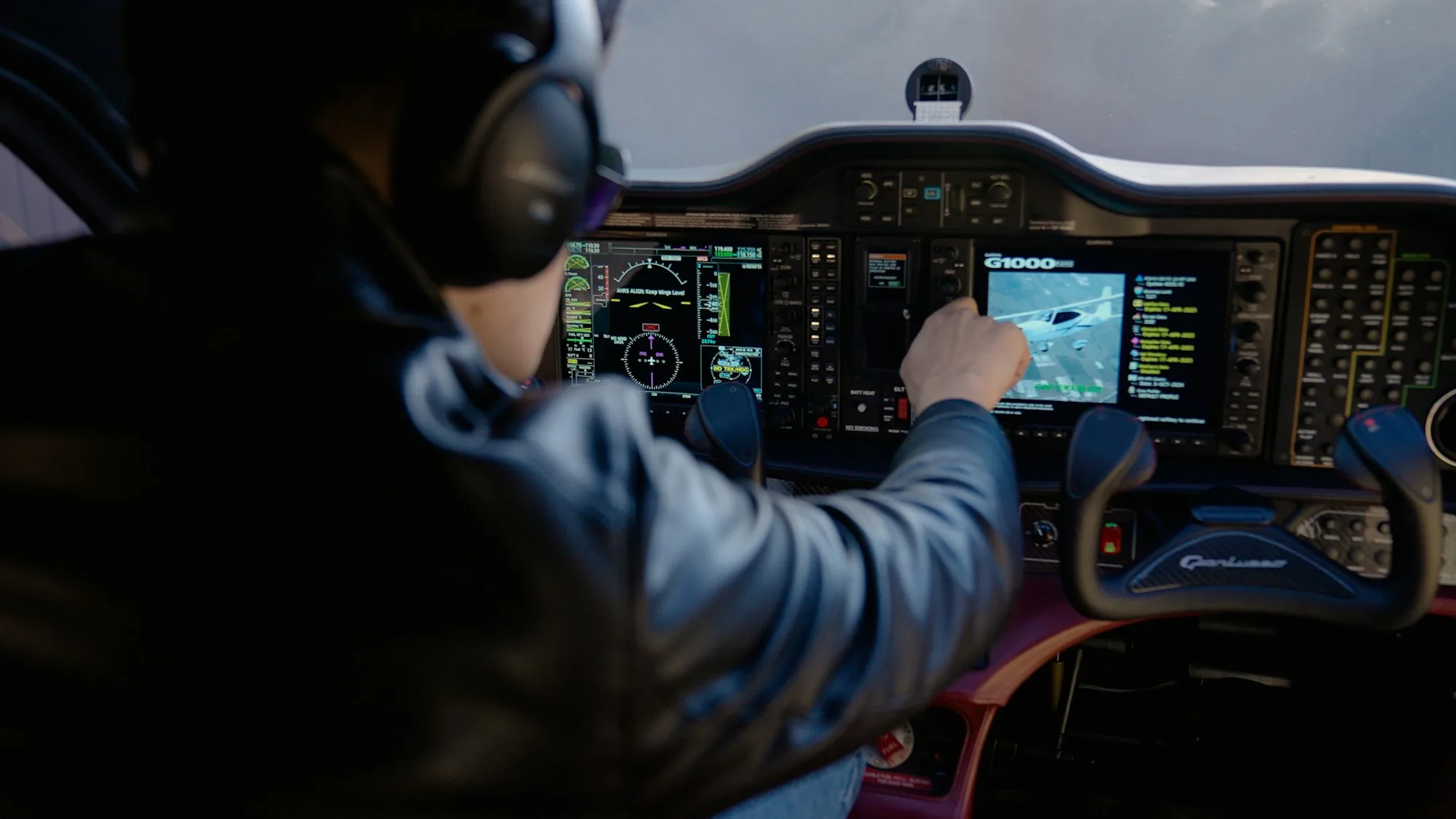
Introduction: Pressure Changes the Shape of Work
High workload is not simply a long list of tasks. It is a condition in which demands arrive faster than they can be understood, prioritised, and completed. Weather deteriorates, a clearance changes, a system behaves unexpectedly, or a passenger concern competes for attention during a critical phase. Each item may be manageable alone. The danger emerges from their interaction: attention narrows, working memory fills, and actions that normally feel effortless begin to require conscious effort. Professional workload management starts by recognising that pressure changes how the mind works, not merely how busy the hands become.
The objective is not to become infinitely capable. No pilot can process unlimited information, and expertise does not repeal human limits. The objective is to protect finite capacity and spend it on what matters most. That requires preparation before demand rises, disciplined priorities while it is high, and an honest reset after the immediate threat has passed. Calm performance is therefore less about temperament than architecture: a set of habits that prevents urgency from deciding where attention goes.
Recognising Saturation Early
Task saturation often announces itself quietly. A pilot rereads the same line, misses a radio call, stops making routine callouts, or feels an urge to act before the situation is fully understood. Small errors multiply because the mental model is no longer being refreshed. Another warning is tunnel attention: one indication, checklist item, or operational concern absorbs so much focus that flight path, fuel, weather, or team communication recedes. These cues should be treated as operational information. They indicate that the current method of working is no longer keeping pace with the environment.
Early recognition matters because workload is easier to manage before capacity is exhausted. A simple internal question—what am I no longer monitoring?—can reveal narrowing attention. In a crew, direct observations are even more useful: “We are getting behind,” “I have lost the bigger picture,” or “Let us slow this down.” Such statements are not admissions of incompetence. They are interventions. By naming the state, the crew turns an invisible cognitive problem into a shared operational issue that can be managed.
Use Priorities as a Filter
Under pressure, priorities must be more than a slogan. Maintaining control and a safe flight path comes first because every other option depends on it. Navigation, terrain clearance, fuel state, and communication follow according to the circumstances. Administrative completeness belongs later. This ordering gives the pilot permission to defer low-value work, request a delay, reject an unsuitable instruction, or discontinue an approach. A task can be legitimate without being timely, and the ability to distinguish those two qualities is central to sound airmanship.
A useful technique is to reduce the situation to three questions: What must happen now? What can wait? What can be removed entirely? The answers should produce a short, explicit plan. “Maintain altitude, stabilise the flight path, then diagnose” is better than an unspoken intention to handle everything at once. Sequential work protects accuracy. It also creates clear handoff points in a crew, allowing one person to fly while another communicates, consults guidance, or calculates options without competing for the same mental space.
Create Time and Space
Time is one of the most effective workload controls, and pilots can often create more of it than they initially assume. Reducing speed, entering a hold, delaying a descent, requesting vectors, levelling temporarily, or going around can convert a compressed problem into a manageable sequence. These actions may feel inefficient in the moment, but efficiency is measured against a safe outcome, not the shortest track or earliest landing. Continuing at the original pace while understanding falls behind only transfers unresolved work into a more demanding phase.
Space matters in a cognitive sense as well. Silence nonessential conversation, postpone secondary programming, and simplify automation if managing it is becoming harder than flying directly. Use written notes for headings, frequencies, fuel figures, or constraints rather than asking working memory to carry them. A concise briefing can clear ambiguity: state the problem, the immediate priority, each person’s role, and the next decision point. These small acts create room for thought when the environment is trying to consume it.
Coordinate Without Adding Noise
Communication should become shorter and more deliberate as workload rises. Long explanations can obscure the action required, while vague language forces others to interpret intent. Closed-loop exchanges work because they make ownership visible: assign a task, receive an acknowledgement, and confirm the result. If a message is not understood, clarification is more valuable than polite silence. The aim is not constant speech but shared awareness—each person knowing what is happening, what matters next, and where support is needed.
Good delegation also respects capacity. Giving three complex tasks to a person already managing radios and a checklist does not reduce workload; it relocates overload. Leaders should distribute work, then check whether the distribution remains realistic as events change. Team members should state when they are at capacity and offer specific assistance when they have room. External resources are part of the same system. Air traffic services, dispatch, maintenance, cabin crew, and ground support can provide time or information when contacted with a clear request.
Recover the Operation
When the peak passes, there is a strong temptation to resume the original plan immediately. Yet residual workload remains. Actions may have been deferred, modes changed, fuel consumed, weather updated, and assumptions invalidated. The crew needs a deliberate reset: confirm flight path and automation, review aircraft status, account for outstanding checklist items, recalculate margins, and brief the revised plan. This pause prevents the solution to one problem from becoming the source of another.
Workload management improves through reflection as well as exposure. A useful review asks what first signalled saturation, which action created capacity, what communication helped, and where the plan remained fragile. The lesson should be expressed as a repeatable behaviour, not a judgement about personality. “Ask for extra track miles when programming extends into descent” can guide future action; “be less stressed” cannot. Specific learning turns a demanding event into preparation for the next one.
Conclusion: Capacity Is a Safety Resource
Workload under pressure is managed by defending attention before it fragments. Recognise saturation, protect the flight path, reduce the task set, create time, communicate clearly, and reset after the peak. None of these actions is dramatic, but together they keep the operation inside human limits. The strongest cockpit is not the one that appears busiest or fastest. It is the one that preserves enough capacity to notice change, challenge assumptions, and make the next good decision.